Australia can sometimes be a true four-season climate, swinging from sweltering summers to bitingly chilly winters. Build a roster of quality suits without paying due attention to selecting the
The simplest rule of thumb to follow is: heavier fabrics for winter, and lighter fabrics for summer
 Hopsack fabric is both lightweight and
Our team of fitters will discuss your fabric preferences in relation to colours and patterns that better suit your lifestyle, but also consider options for the types and weights of fabrics used. This might
Further complicating matters, different fabrics of the same weight might also vary in quality; yet
 Flannel is a heavier fabric that's perfect for colder
These are amongst the important
Drape: the fabric’s weight significantly impacts its drape, or the way it hangs, which ultimately informs where and how the tailored garment should
Comfort: heavier fabrics
Material: wool is eternally popular because it breathes well as a natural fibre, is soft yet robust, and resistant to wrinkling. Wool might also
Durability and Usage: no particular suit should
A good tailor should weigh up
By Jack Hayes
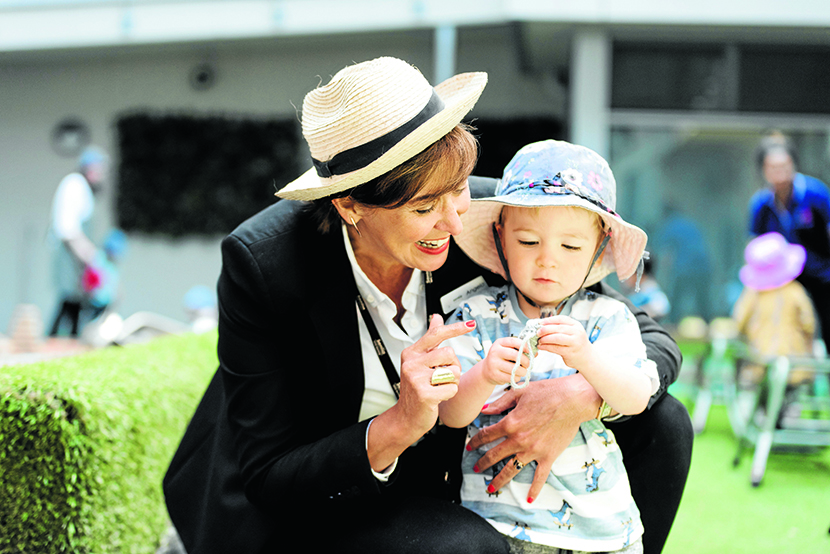
Sitting on the northern banks of the Yarra, nestled between the Melbourne Aquarium, the Immigration Museum and Enterprize Park, you’ll find Sentia Early Learning: an oasis of industry-leading early childhood education.
As a single, privately owned service, Sentia provides a tailored and balanced values-based model, designed around the needs of their children, parents and educators.
With 15 years of experience, Sentia boasts one of the most sought-after views in the CBD with views across the Yarra providing a bright and positive environment where children can explore, bond, and imagine.
For Sentia Early Learning centre director Angela Hunt, the recently refurbished indoor and outdoor spaces offer the perfect canvas for a child’s development, empowering them to make decisions regarding their play, learning and social interactions.
“We pride ourselves on the environment we have created for our children and educators. But they are just a space, without the people,” Ms Hunt said.
“We focus and treasure our relationships with families. It can be the case, if we have a family’s first child, second child or even third child, we can have up to a 10-year relationship with them. We become a part of their family which is a real privilege for us.”
Sentia follows the Early Years Learning Framework (EYLF) from birth to five years including a fully funded three and four-year-old kindergarten program run by a qualified kindergarten teacher. Each child’s learning development is documented by the curriculum plan, their visual portfolios, reflection journals, newsletters, and projects on display.
The two-level centre has the capacity for 124 children across seven rooms, with a recently installed commercial kitchen and fully qualified full-time chef preparing meals across the day.
“We worked with local suppliers, too, at the Queen Victoria Market to ensure ingredients are fresh. Everyone knows when food tastes best when it’s prepared from fresh ingredients and prepared with love,” Ms Hunt said.
“We also offer a takeaway meal service for our families. They just jump on our website, order their family meal and when they pick up their children, they pick up their dinner; it is about helping our families balance their busy lives.”
Ms Hunt said although Sentia followed the EYLF, her team had curated a program that extracted the best of all teaching philosophies such as the Reggio Emilia approach, which sees the environment as a third teacher, as well as using elements of Steiner and Montessori in their educating.
One would be forgiven for taking a lull in capacity during 2020 due to a global pandemic as a time to rest, but for Ms Hunt and her team this period was spent refining their approach and developing their own “Sentia Family Framework”.
“We are the first childcare that I know of in Victoria that has the ‘happy or not’ technology for children and parents. We provide them with a screen to select from a number of options, then we analyse the results after that and alter our program where needed,” Ms Hunt said.
“It allows us to ensure the children, their families and our educators are as happy as they can be.”
“Our team is the heart of Sentia and our relationships are a real point of difference with us. I did calculations recently and the average tenure is four-and-a-half years. That is unheard of in childcare.”
According to Ms Hunt, children at Sentia are instilled with a sense of agency the moment they first walk, crawl or are rolled through their doors.
So much so, the refurbishment of its enormous rooftop playground was co-designed with a landscape architect and their room two with children.
Sentia’s program features a mixture of indoor and outdoor learning, as well as weekly incursions, and excursions throughout Melbourne.
“We have a great partnership with the Immigration Museum which sees our children visit for bilingual language time, and although they can’t always understand when the Hungry Little Caterpillar is being spoken is Mandarin, they love the sound and flow of it,” Ms Hunt said.
“We make sure children of all backgrounds and cultures are considered and catered for in our program through our teaching, menu and other resources.”
“We are also inclusive of children with additional needs to ensure all children are welcomed. We understand it can be challenging, but that is where our training and expertise coming into play, so that no child is left behind.” •
For more information: sentia.vic.edu.au