As opposition to data centres intensifies across parts of Melbourne, the City of Melbourne has released a draft position paper that seeks to impose clearer conditions and standards on the industrial-scale facilities while remaining broadly supportive of their development.
At least three other Melbourne councils have declared moratoriums on new data centres. However, a proposal from Greens councillor Dr Olivia Ball to consult the community about doing the same until stronger regulations were in place was voted down at the August 18 Future Melbourne Committee meeting, with no other councillor supporting it.
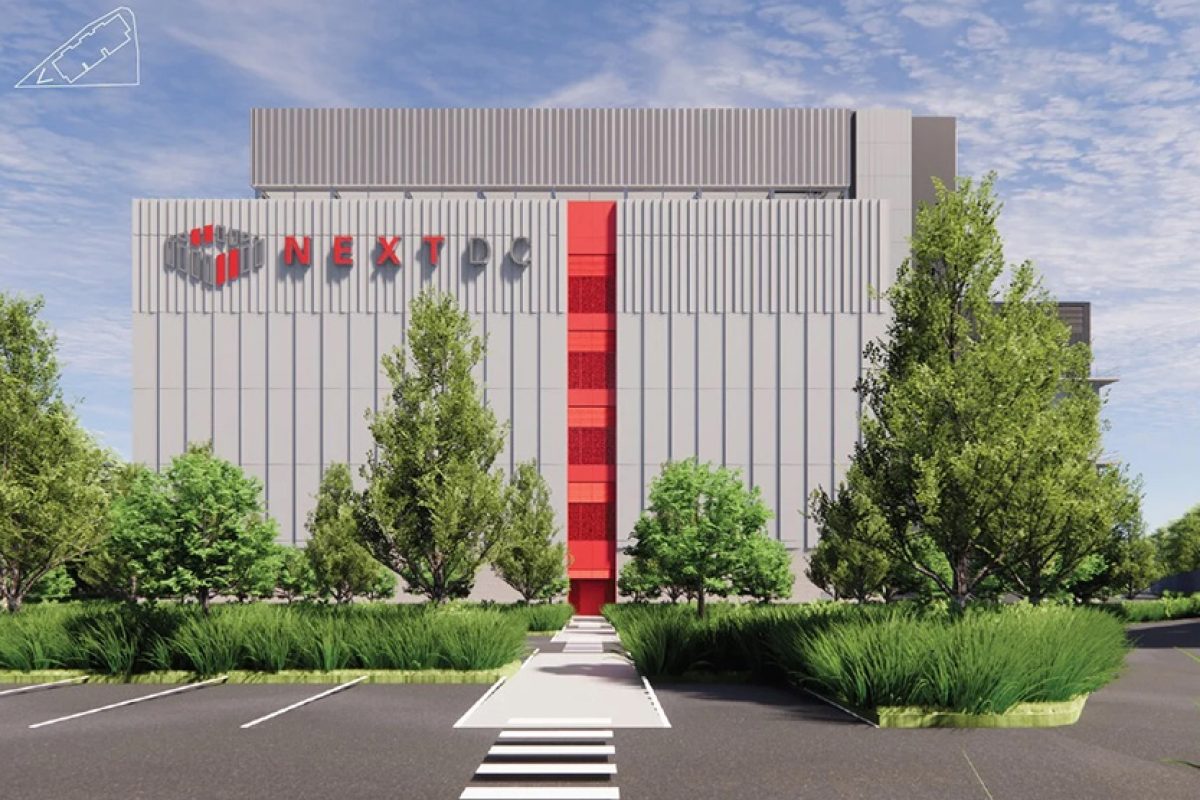
The City’s Draft Position Paper on Data Centres and AI Infrastructure was requested in the wake of the state government’s January 2026 approval of a five-storey “hyperscale” data and AI centre on the former Herald Sun printing site at Fishermans Bend.
Announced by then premier Jacinta Allan in June 2025 before a planning application had been lodged, the M4 facility in Todd Rd was promoted as a major technology investment that would create jobs across AI, digital infrastructure, defence technology and research.
Developer NEXTDC described it as a $2 billion “AI factory and technology campus”.
The project was approved through the state government’s Development Facilitation Program, leaving council with an advisory role only.
Concerned about power and water demand, amenity impacts and the use of a large employment precinct site for a facility likely to generate comparatively few ongoing local jobs, Lord Mayor Nick Reece and Deputy Lord Mayor Roshena Campbell sought clearer policy guidance earlier this year.
The resulting draft paper acknowledges the council has limited direct control over such projects, but proposes formal positions on location, planning frameworks, environmental risk, local benefits and transparency. These would then inform council planning policy and advocacy to state and federal governments.
The paper broadly accepts that AI infrastructure will be important to Melbourne’s future economy, but gives less attention to criticism that the rapid expansion of data centres is being driven as much by commercial competition as by demonstrated public need.
It also does not clearly distinguish between conventional data centres and high-intensity AI facilities.
Traditional centres storing data such as photos and videos may use anywhere from around 5MW to 40MW of power. AI-focused facilities, designed to train or run large language models, can require more than 100MW and in some cases approach 1GW, while also requiring significant cooling infrastructure.
The scale of future demand remains uncertain.
An analysis commissioned by the Australian Energy Market Operator found much of the data centre capacity requested from the grid in early 2025 could be described as “phantom demand”, reflecting companies competing to secure future capacity rather than firm consumption.
NEXTDC is currently developing an initial 10MW stage of M4, which has been promoted as eventually exceeding 150MW. No major customer contracts for the facility have yet been announced.
Cr Reece has argued there is potential for a “win-win” outcome in which data centres support economic growth while helping drive investment in renewable energy and recycled water.
But a May 2026 Greenpeace report questioned that optimism, arguing the sector risked increasing fossil fuel dependence unless stronger safeguards were introduced.
The report called for an urgent moratorium until requirements around energy use, emissions, finances and services were legislated.
The federal government is planning national AI laws, including minimum requirements for large data centres, by early 2027.
Public feedback on the City of Melbourne’s draft position paper is open until September 30.